Two first-time players, a locked hotbar, and a dog with no eyes
Two people who had never seen CropCorp before sat down and played it, and their notes ran the night’s work. There is no substitute for this. A build you have been staring at for a week is a build you cannot see.
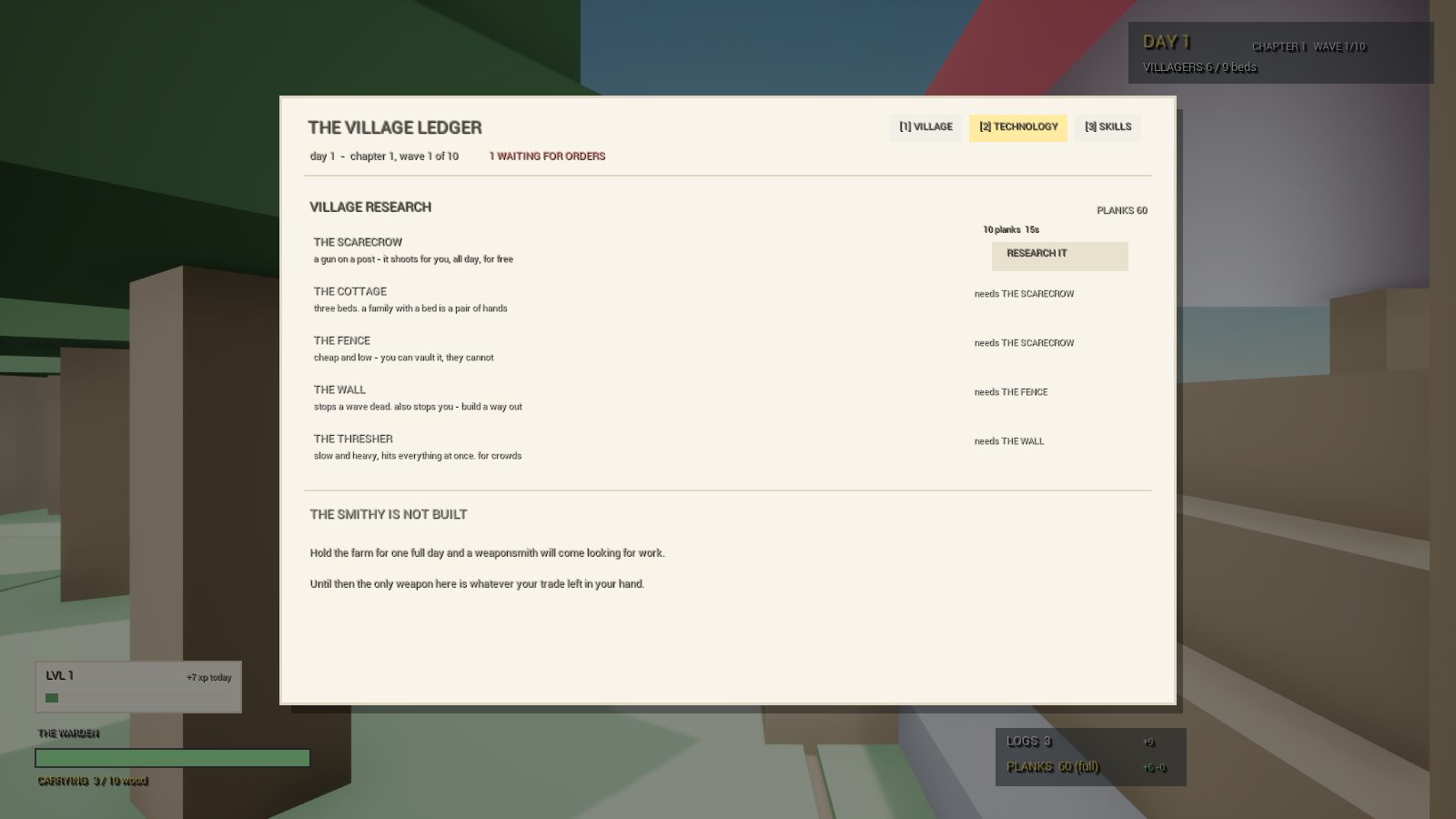
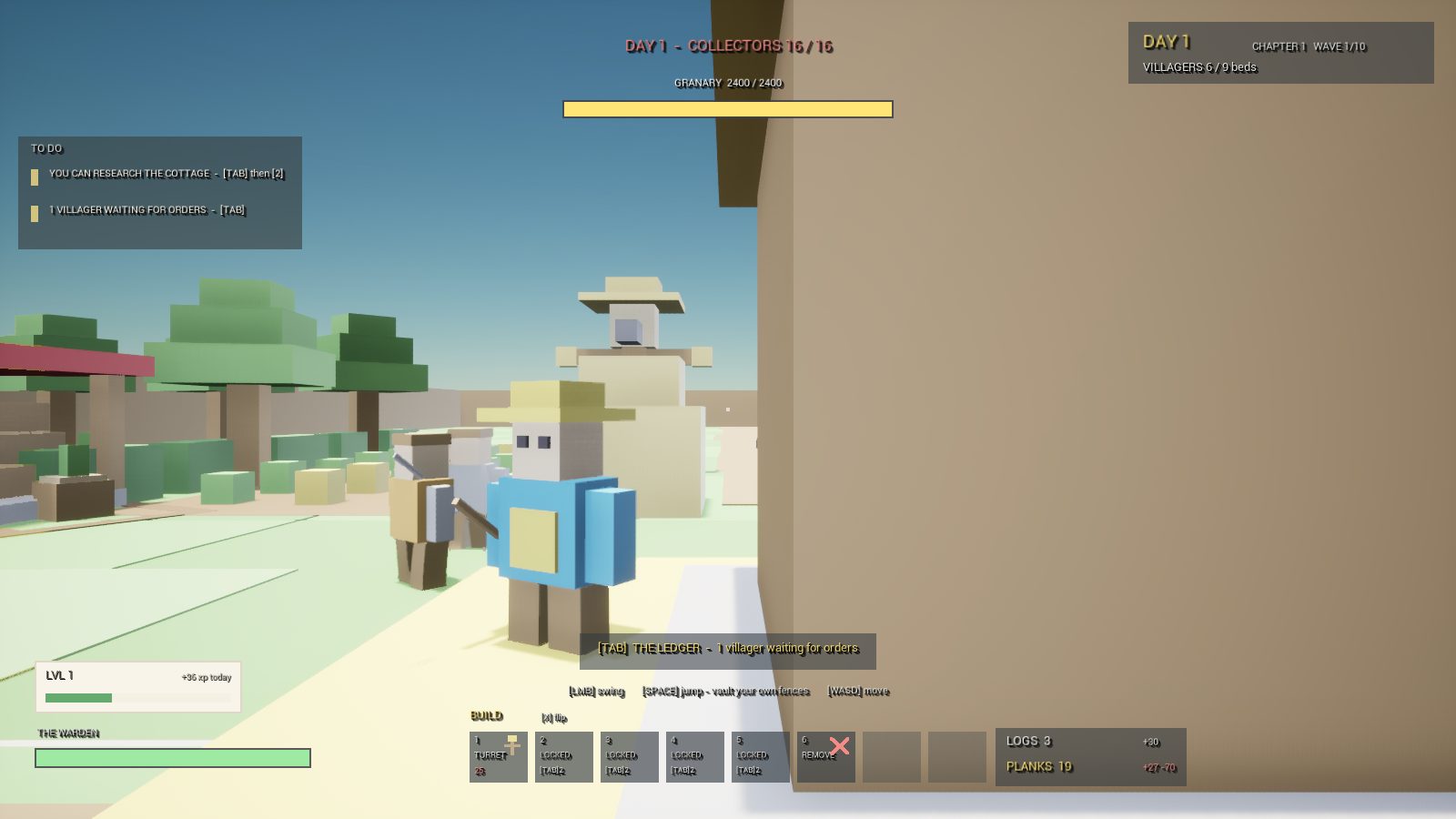
Almost everything they hit was the same complaint in different clothes: the game was advertising things it would then refuse to sell. The hotbar showed a house and a thresher with prices on them from the first minute, and pressing the key did nothing, because both are gated behind research that has not happened yet. Five of the six slots now say LOCKED and mean it, the remove tool moved to the end of the row, and the technology page shows the ladder with the scarecrow still locked at the top of it — a state that exists for about fifteen seconds of a run and had never once been photographed. Logs and planks moved to sit beside the bar rather than across the screen, because a number you check constantly should not require a saccade.
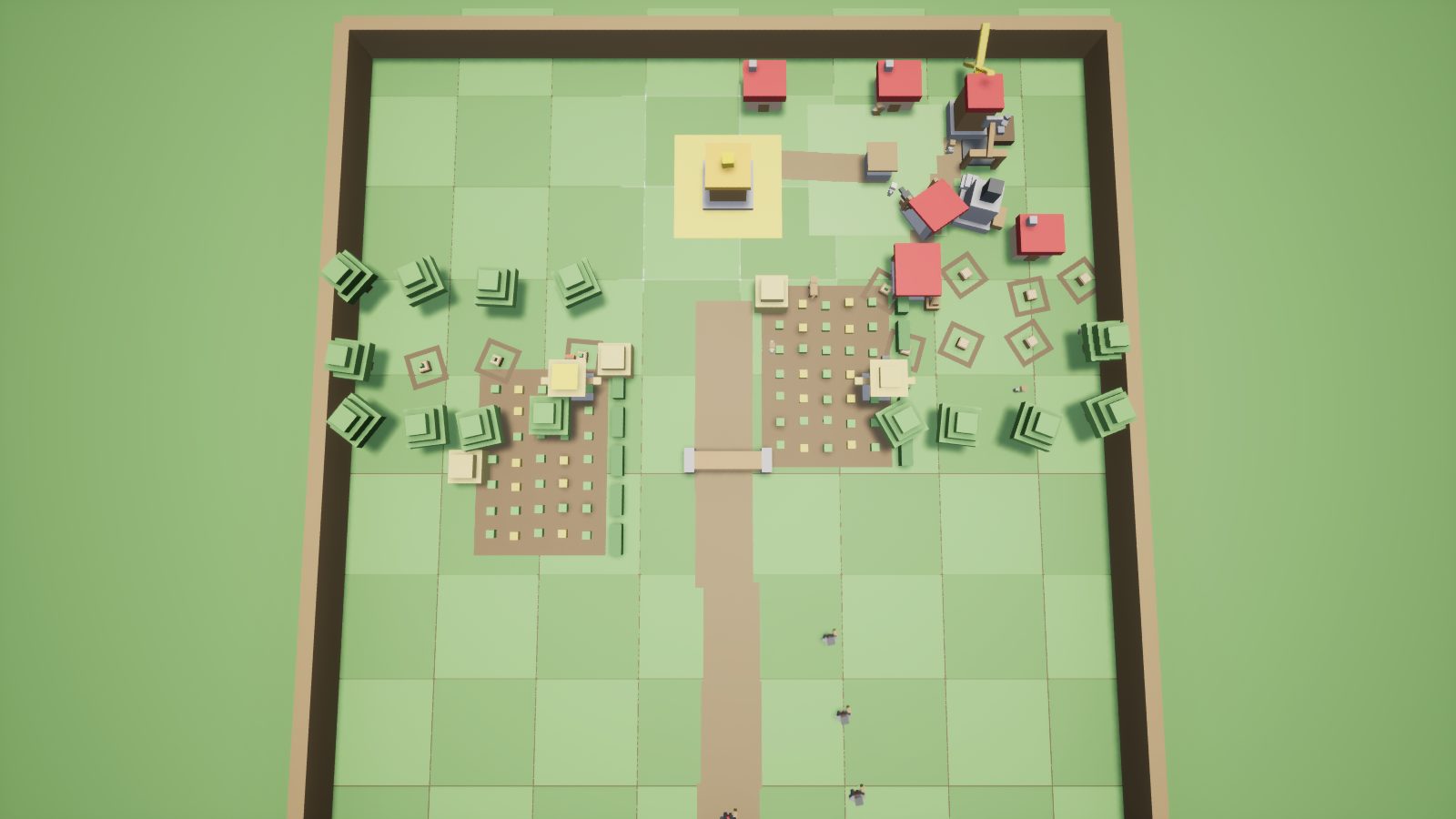
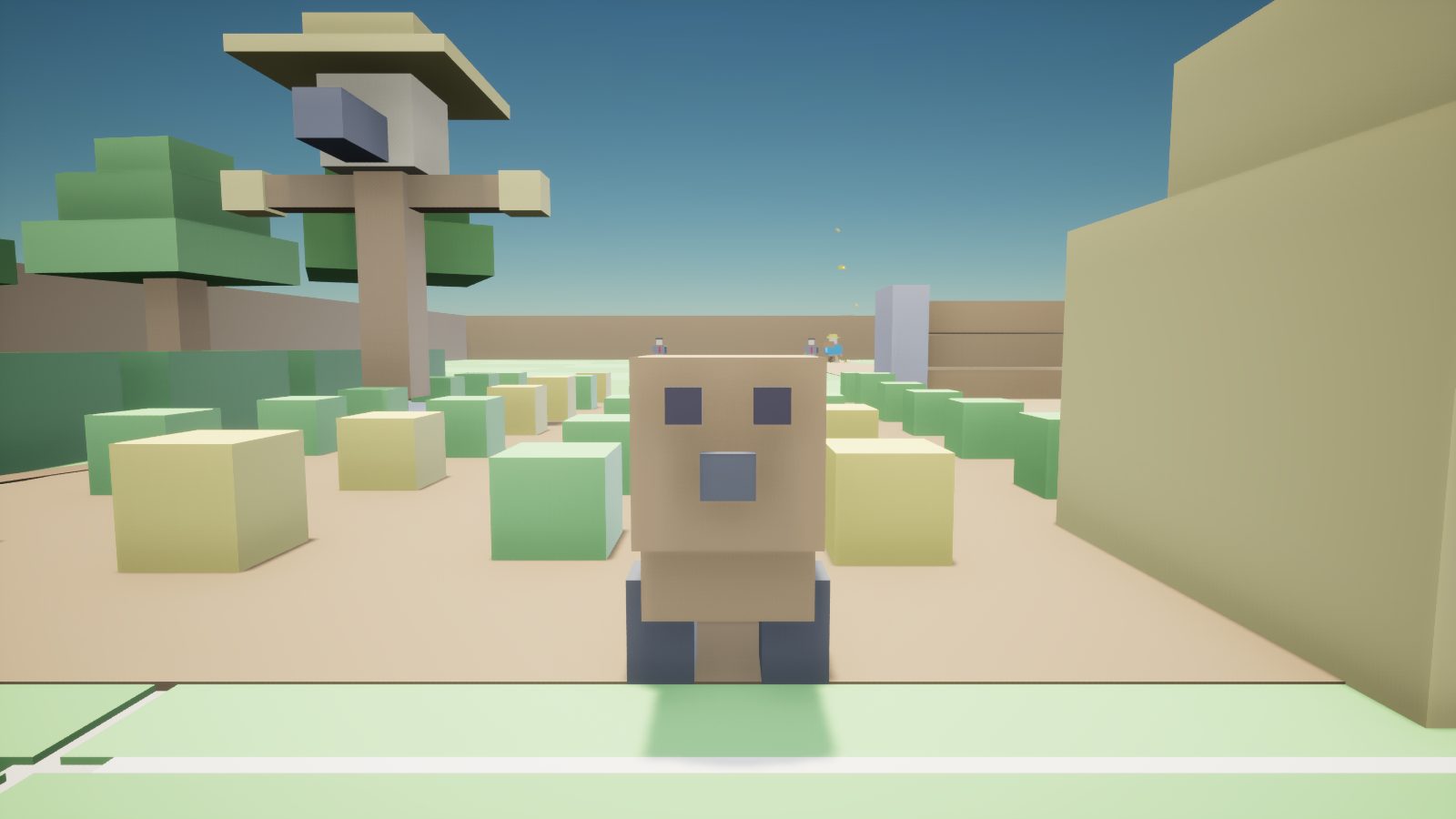
The other half was legibility, and one note in particular was worth the whole session: from above, the guns and the trees looked the same. That is fine until the battle map exists, and the battle map is exactly where you most need to know where your defences are. Scarecrows now wear a hat with a brim that reads from directly overhead, straw cuffs on the arms, and the lighting was fixed so their undersides stop photographing as pure black. They read as guns from the air and from eye level, next to real trees, in the same frame.
And then Bounce, who had no eyes. From the side his dark snout read as one and nobody had noticed; face on, there was nothing there. The first fix did nothing at all, and no amount of reading the code would have said so: the eye blocks hang off the head, the head is itself a scaled-down block, and a child inherits its parent’s scale, so two eyes ended up buried inside the skull at a few millimetres across. The code was correct and the dog was still blind. Only the photograph could tell the difference — the fourth time this project has paid that particular bill, and the reason the rule here is that nothing counts as done until it has been looked at.