The run ended, and the game kept asking you to build
There is a rule in this project that has now bitten four times, and it has a shape: a system whose escape route re-enters the trap. Last night it was the defeat readout losing to an open page — you lost the farm, and the game showed you a weapon rack. That was fixed. Tonight the camera found the next door in the same wall, and this one had been open the whole time.
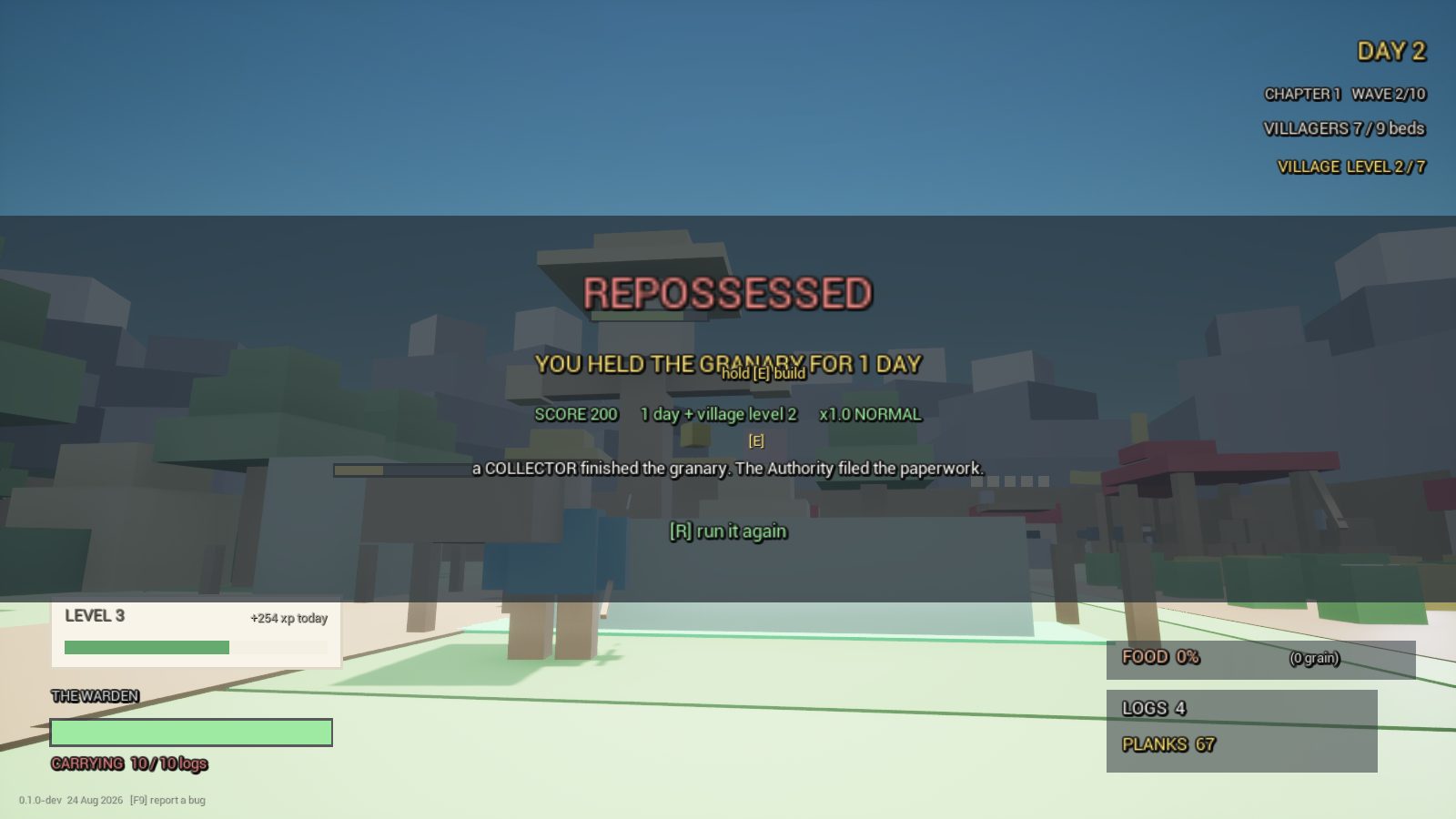
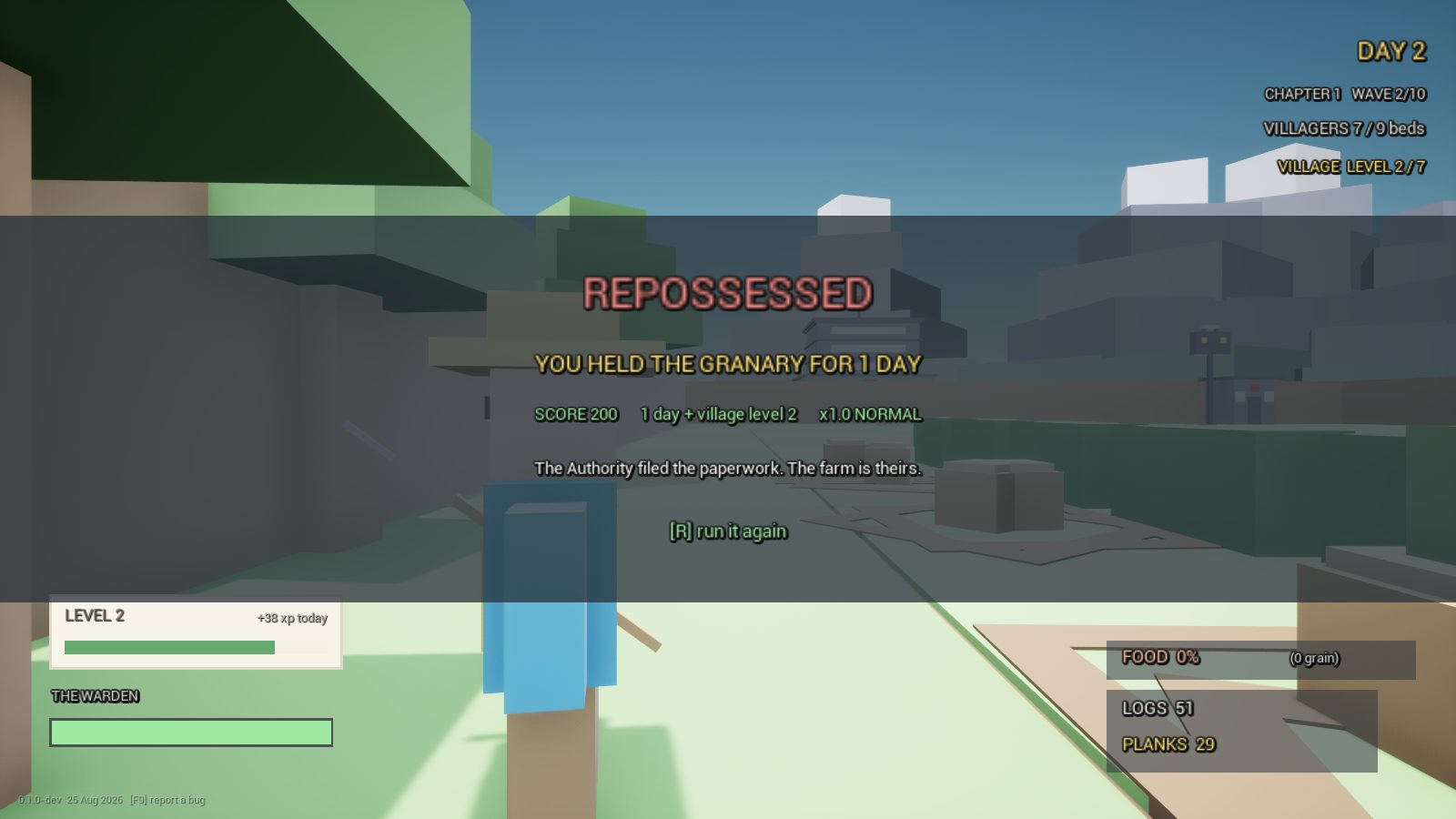
When the granary falls, the game draws REPOSSESSED, the score, and how long you held. Underneath that, it was still drawing the world: “hold [E] build” printed straight through “YOU HELD THE GRANARY FOR 1 DAY”, a stray [E] chip under the score line, the placement ghost still glowing on the ground. Worse than untidy — the buttons still worked. You could keep chopping, keep hammering, keep building on land the Authority had just repossessed, while the screen told you it was over.
The strange part is that the game already knew better in three places. The ledger refuses to open once you have lost. The build hotbar refuses to draw. The autopilot was taught months ago to down tools on defeat, after the owner watched a test run “carry on chopping even after repossessing”. Every part of the game agreed the run was over except the player’s own hands. So the law is now written once and applied everywhere: the run is over, so the hand is empty.
The picture that proves it, and the picture that proved nothing
The fix was easy. Proving it was not, and that turned out to be the useful part of the night.
The obvious move is: fix it, take another screenshot, see a clean readout, done. That screenshot arrived, and it was worthless — the run had happened to end somewhere with nothing near the hero, so there was no prompt to suppress. A clean photograph of an empty field looks exactly like a working fix. That is almost precisely how a “fix” shipped last night that did nothing at all.
Getting a real loss on demand was harder than expected. Running undefended reached day 3 and stopped. Running undefended at chapter 3 sat at full granary health — the hero alone holds the line. The outcome screen, the last thing a losing player ever reads, could only be photographed when some unrelated test happened to die. That is why it hid two separate bugs on two consecutive nights.
So the game got a switch that fells the granary on purpose — and, crucially, waits until the player actually has work under their nose before it does, because that is the only state in which the bug could ever have shown. The frame now says out loud what it swallowed. The verdict reads:
-CCLoseNow felling the granary on day 2 - live prompt: YES
OUTCOME suppressed a live prompt - talk=0 work=1 card=0
Two lines: the state was real, and the readout won. The defeat screen is now a standing check that runs every night instead of a screen nobody could reach.
One mistake, wearing four different hats
The other findings tonight are all the same mistake, and naming it is the point. A label is pinned at a fixed distance from the left edge of a panel. Something else is pinned to the panel’s right edge. The panel changes size. They meet.
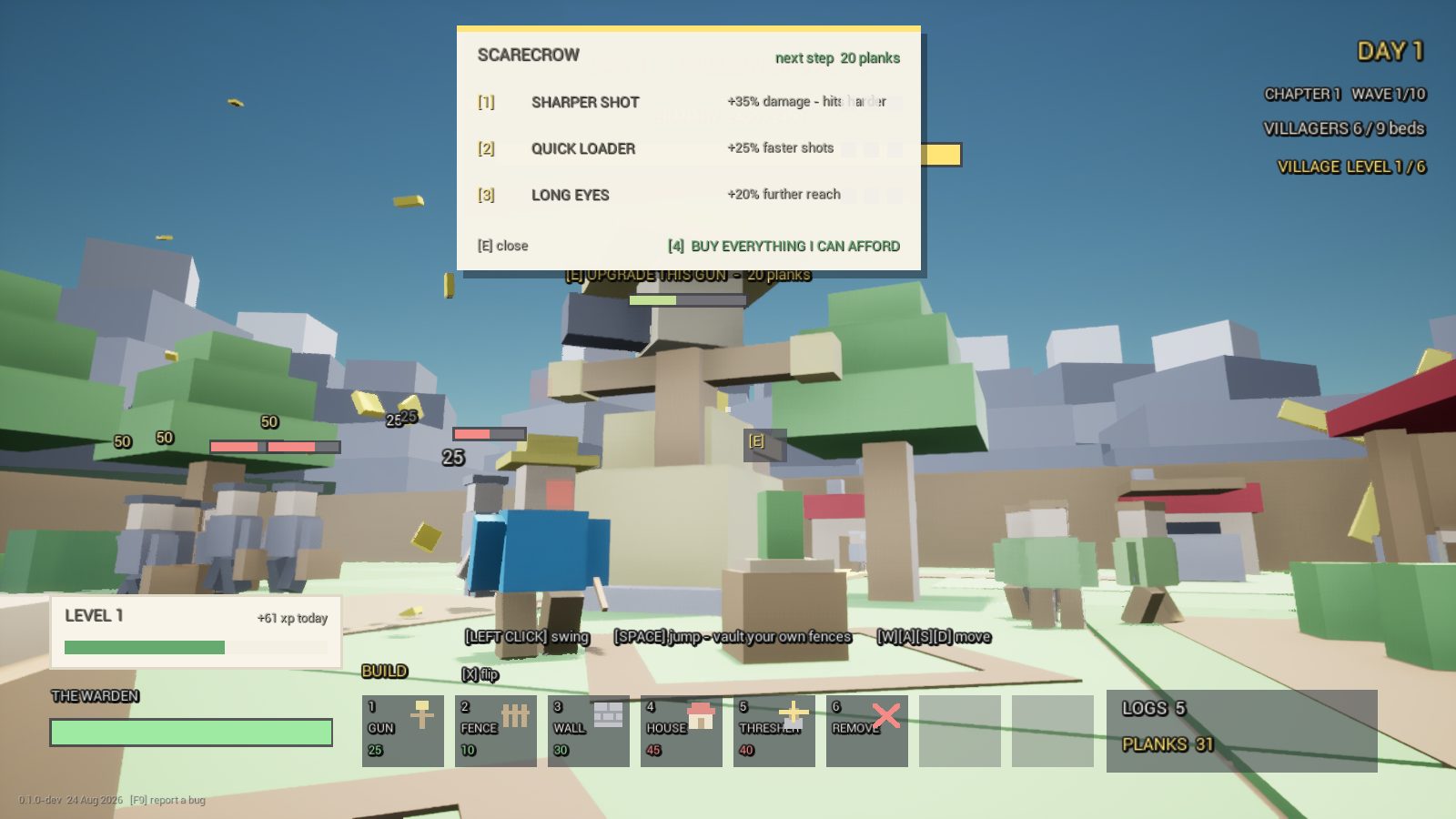
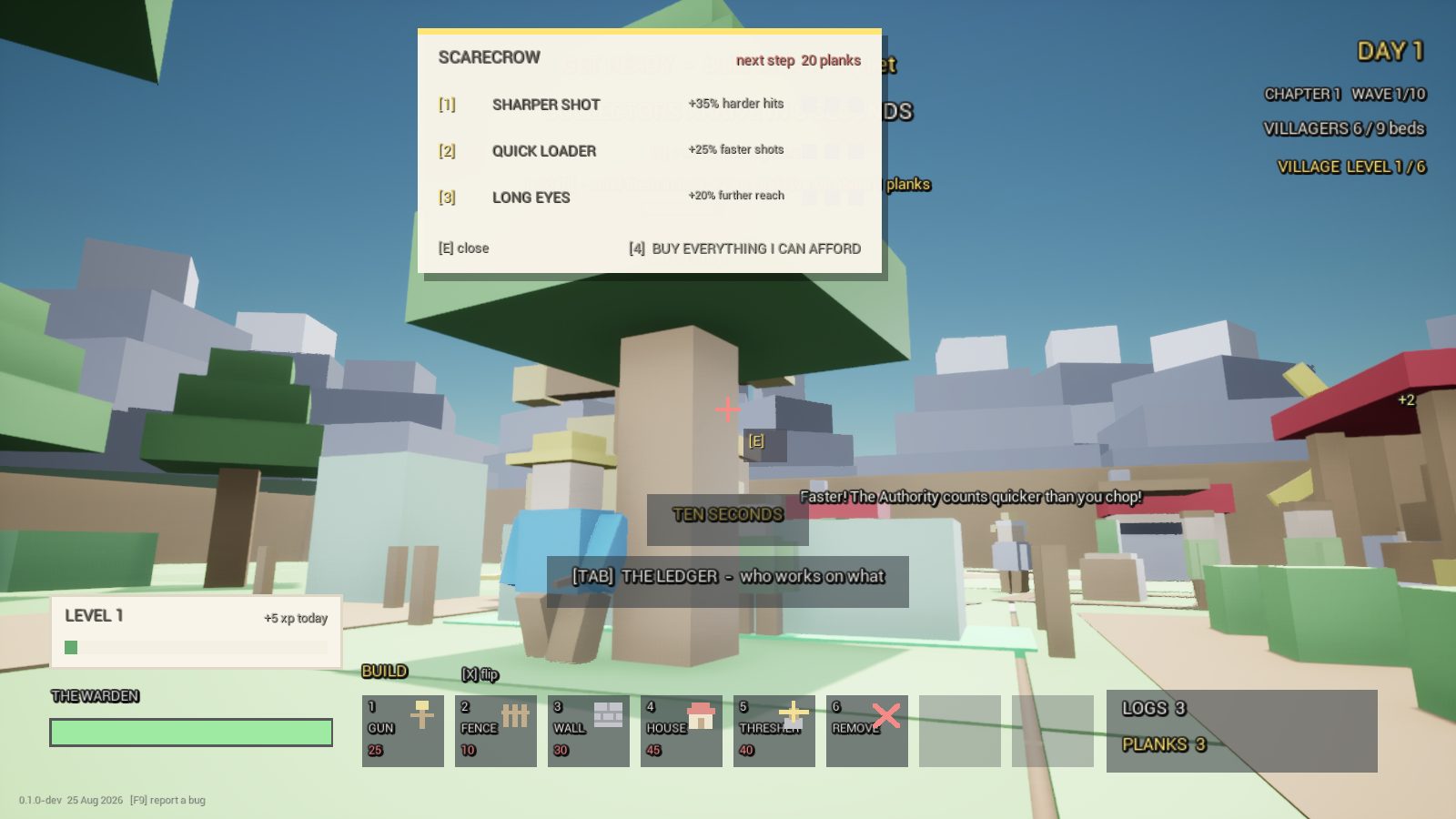
- On the gun upgrade card — the one screen an eighteen-year-old tester failed to find for forty-eight minutes — “+35% damage – hits harder” was printing through the rank pips on the top row. It now reads “+35% harder hits”, matching the two rows below it, and the row is measured rather than trusted, so the next wording change cannot quietly reintroduce it.
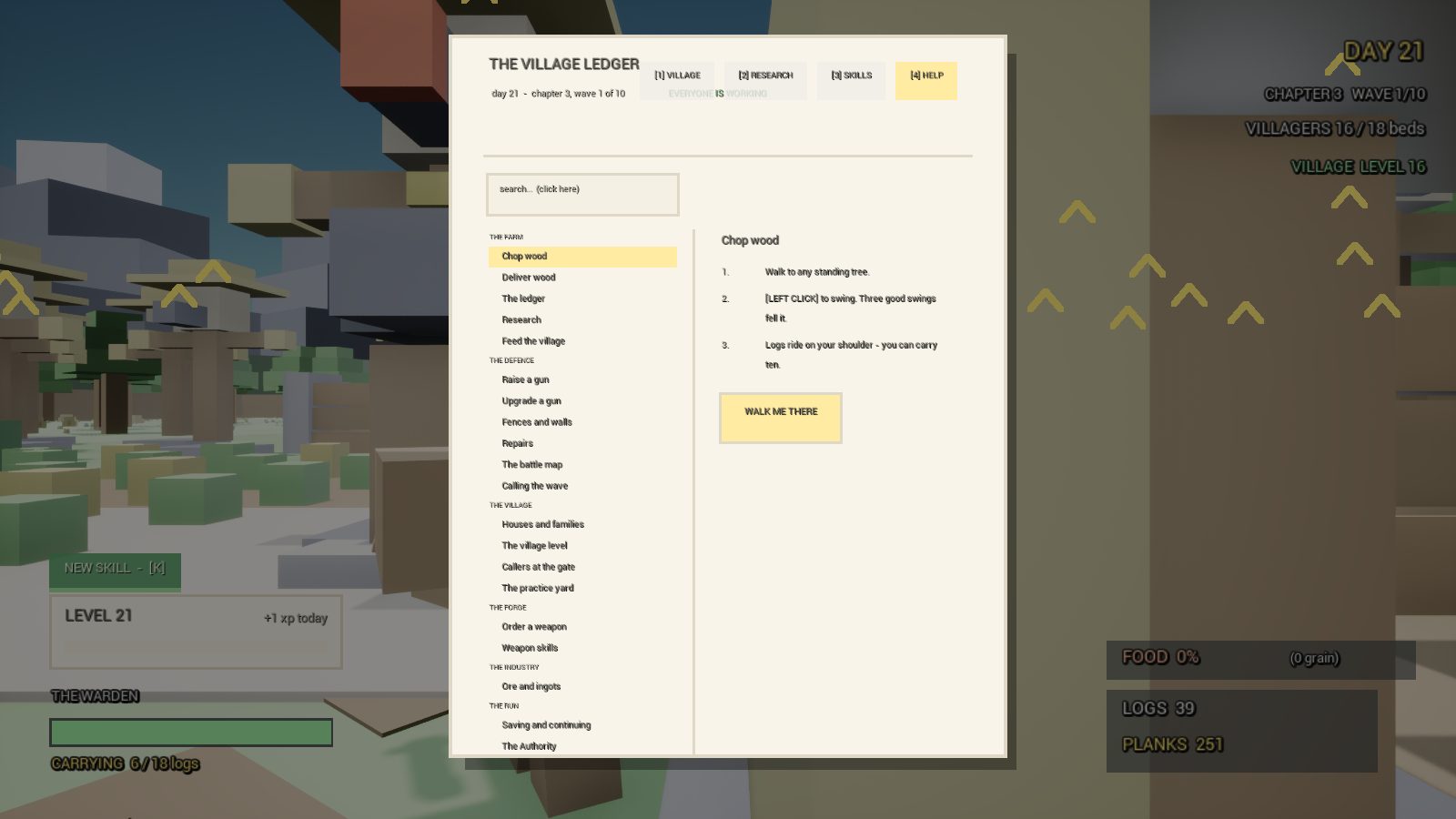
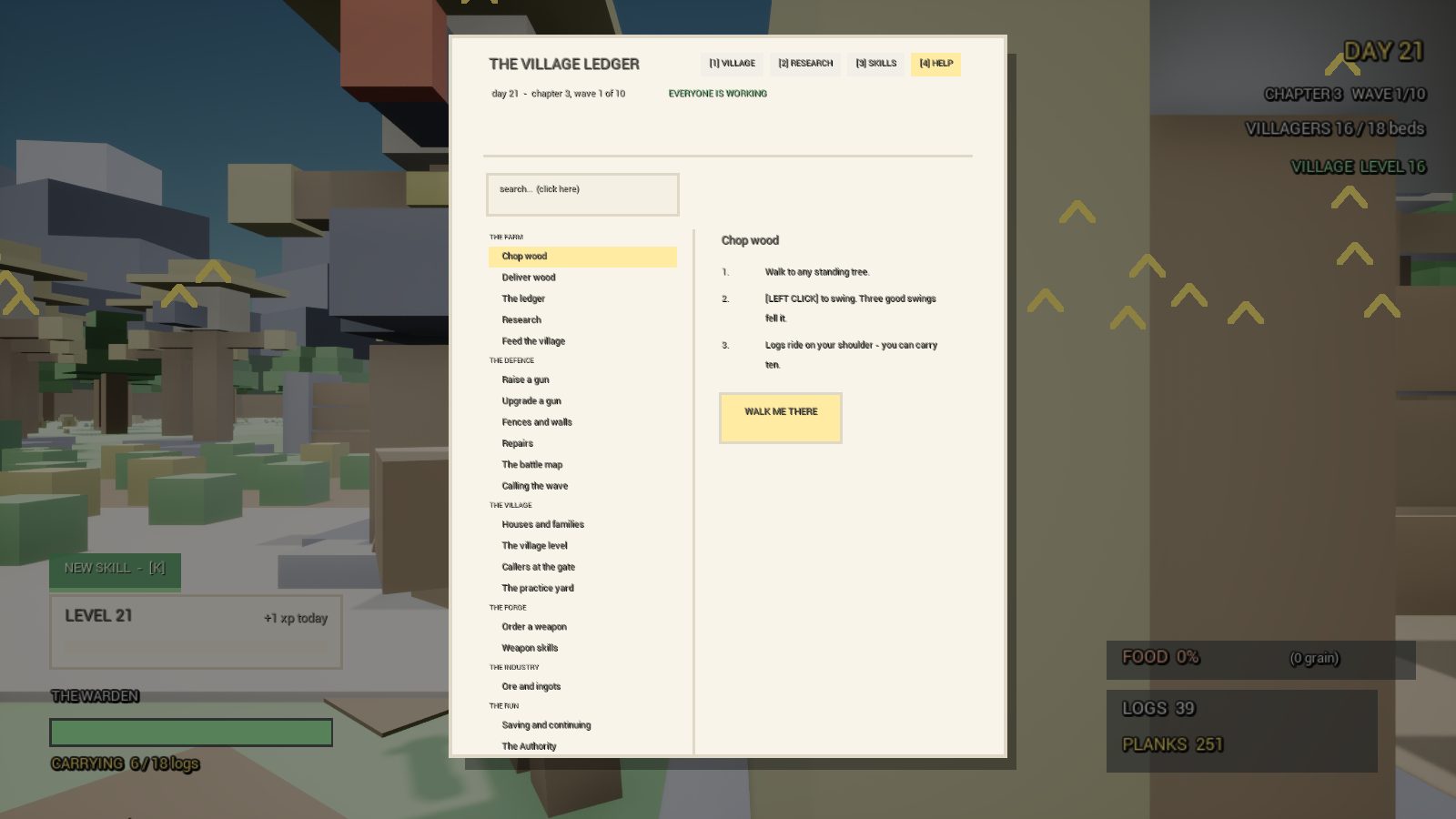
- On the ledger’s tab strip, the four tabs sat at a fixed height while every header line beneath them scaled with the book. On a chapter-3 page the book shrinks to fit, the day line rose into the tab row, and “EVERYONE IS WORKING” printed underneath [1] VILLAGE and [2] RESEARCH. The tabs now scale with everything else, so the two can never meet at any size.
Automated checks are structurally blind to this entire class: they test whether buttons can be clicked, and a rectangle is perfectly clickable with two sentences drawn on top of each other. Only a photograph finds it.
And one prediction that was simply wrong, recorded because being wrong in public is cheaper than being wrong quietly: the handbook’s contents list looked certain to overflow once every topic unlocks. Photographed at full unlock, it fits — the book shrinks itself to fit the page, which is exactly what it was built to do. No bug. The arithmetic was confident and the camera disagreed, and the camera was right.