“Every character speaks the same way”, and she was literally right
A 17-year-old playtester gave us the sharpest sentence this project has collected:
“Every character speaks the same way — easier to skip than to listen.”
Her telemetry measured the cost: half a second per page on the assembled story boards, against four and a half seconds on the one screen that asked her a question. She was not skipping because she disliked the story. She was skipping because there was nothing new arriving.
Going to fix it, we found she had described a specific array. Every villager in the game read from one pool of five lines. The third person you talked to said what the first had said, in the same register, because it was the same five strings.
And underneath that, a second bug wearing the first one’s clothes: villager speech was calling PushFloatingText — the same channel that draws “-25” off a collector. The game’s answer to “talk to this person” looked exactly like its answer to “you hit that thing”: text appearing in mid-air, drifting up, evaporating.
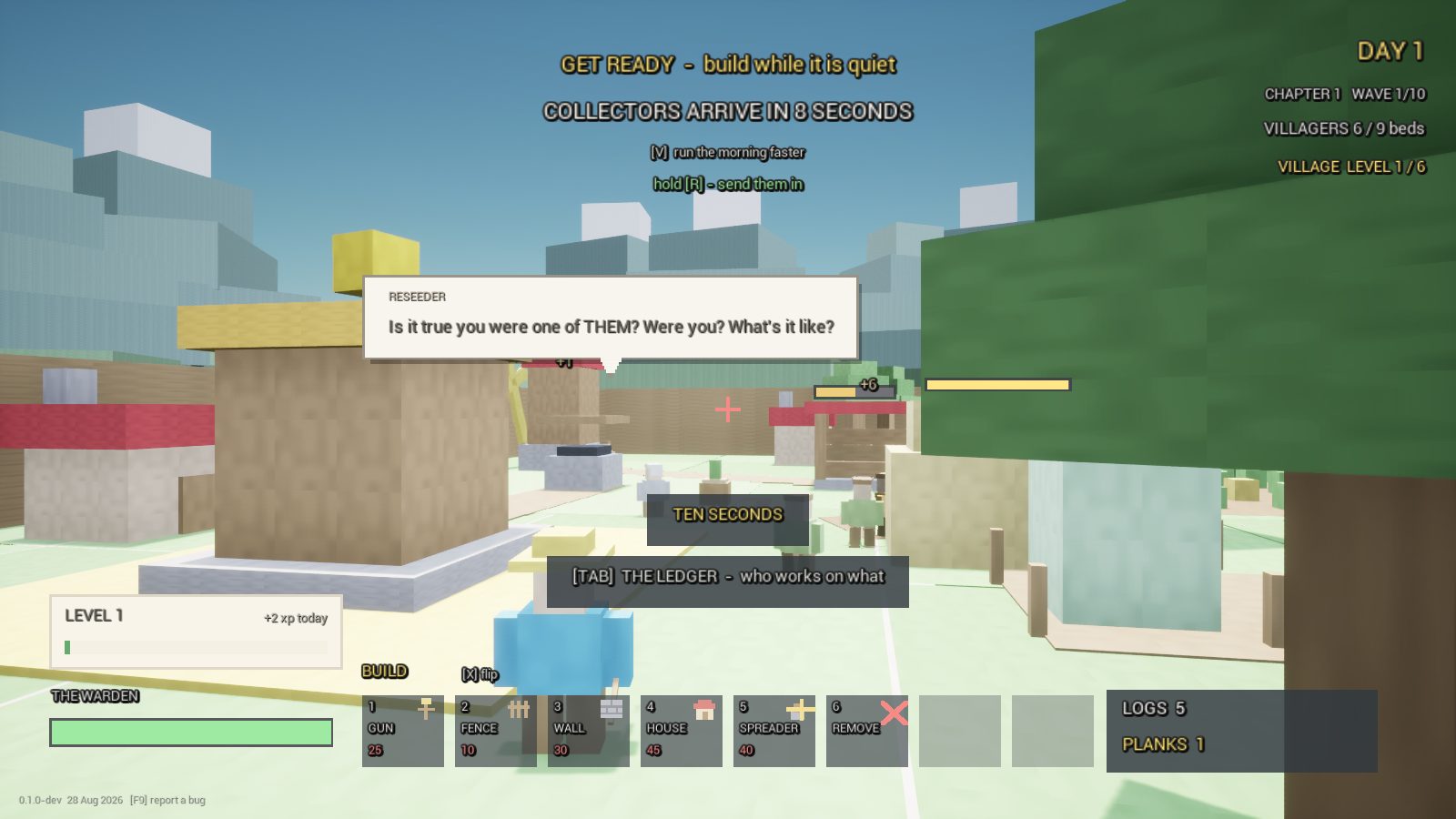
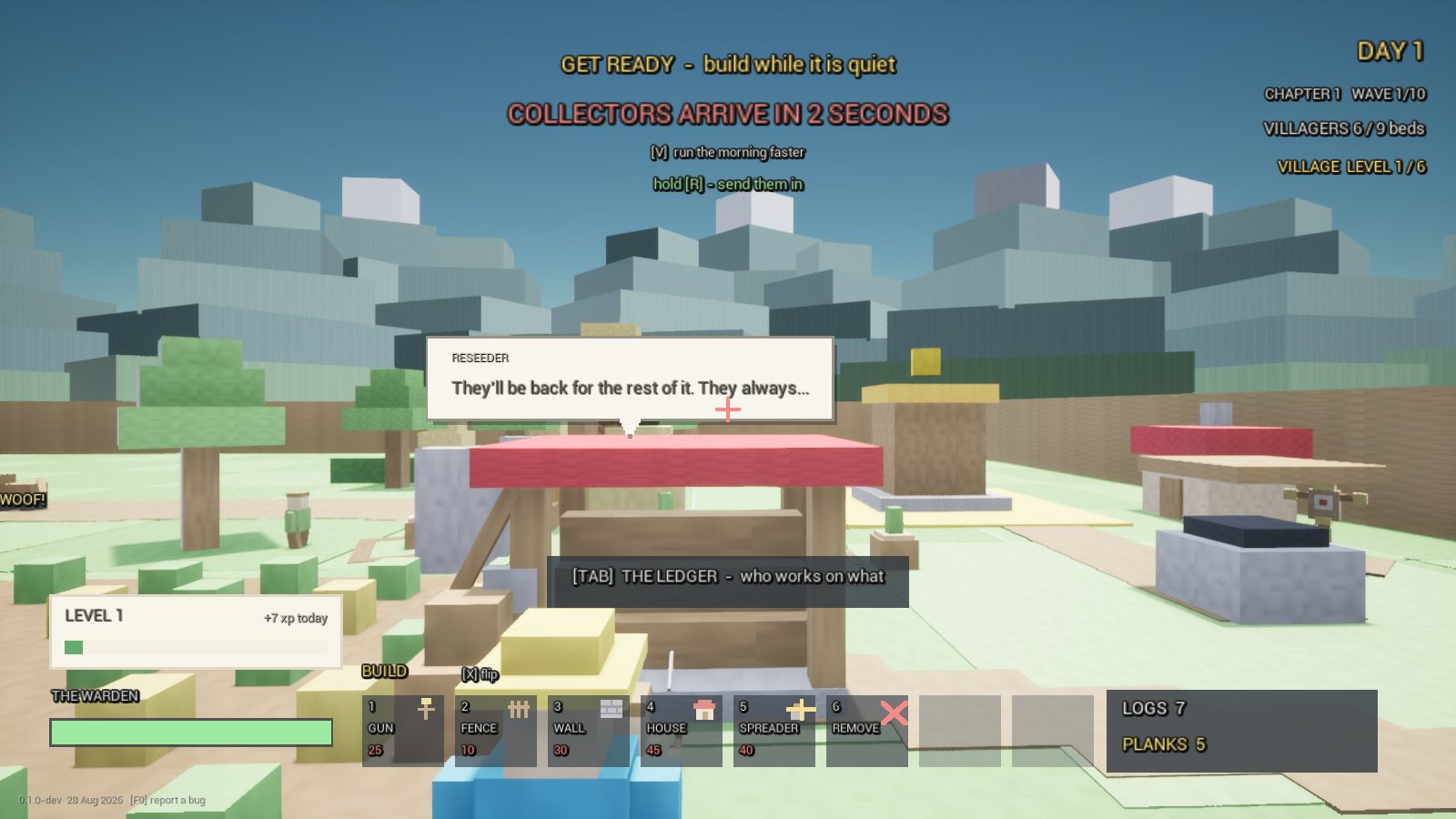
Both of those villagers are RESEEDERS. They are plainly not the same person.
Register, not content
Writing five more lines into one pool would have changed nothing, because the reason the third villager gets skipped is that he sounds like the first. So the five village voices differ in how they talk — sentence length, whether they finish their thoughts, whether they ask you anything:
- the blunt one — “Letter, was it. Hm.”
- the worrier — “They’ll be back for the rest of it. They always…”
- the dry one — “I have paid tax on a turnip. An actual turnip.”
- the warm one — “Sit down a minute, love. You look half dead.”
- the young one — “Is it true you were one of THEM? Were you? What’s it like?”
A villager’s voice is fixed for life, drawn off that villager’s own random stream. A neighbour who is blunt on Monday and motherly on Tuesday is not a character, it is a dice roll.
Speech also got its own shape: a bubble with a tail, that does not drift — a damage number rises because it reports a moment; a person is still standing there. Only one is ever on screen, because the old channel could stack three neighbours into a column of anonymous cream text, and a wall of text is the thing that was getting skipped in the first place.
The lines above are still placeholders — the village’s real dialogue is a writing session. But the shape of the fix can now be judged, which was the point.